Selling a waterfront home in Morehead City is not the same as listing a typical home across town. Buyers here are often looking at more than bedrooms and square footage. They want to know how the property lives on the water, how access works, and what records are in place before they make an offer. If you want to stand out and sell with confidence, it helps to understand what matters most in this coastal market. Let’s dive in.
Why waterfront sales work differently
Morehead City’s waterfront market has its own rhythm. The city notes that flooding can come from Bogue Sound, the Newport River, streams, creeks, and canals, with storm surge, extreme high tides, and heavy rain all playing a role. That means buyers tend to ask more detailed questions up front than they might for an inland property.
Waterfront homes also make up a smaller submarket inside the larger Morehead City market. Current public market data shows a much smaller pool of waterfront listings than the city’s overall housing supply. In practice, that means your home should be evaluated against similar waterfront properties, not blended with inland comps that do not share the same access, exposure, or boating appeal.
Boating access also shapes how buyers see value here. Morehead City’s own dock infrastructure highlights how important water depth, tide conditions, and easy access to the Intracoastal Waterway and Beaufort Inlet are in daily coastal life. When buyers shop for waterfront property, they are often thinking about how the home fits their actual use of the water.
What buyers value most
Waterfront buyers usually start with one big question: What kind of water access does this property really offer? A home on a canal, a deep-water lot, a property with a deeded slip, and an open-water frontage home may all be called waterfront, but they do not offer the same experience. That difference can shape pricing, marketing, and buyer interest.
National Zillow research from March 2026 found that waterfront homes sold for 3% more than expected, while homes with a dock sold for 5.4% more than expected. Turnkey homes and remodeled homes also showed stronger performance. For you as a seller, that supports putting the spotlight on the features a buyer cannot easily add later.
Waterfront features to highlight
- Private dock or deeded slip status
- Boat lift presence and lift capacity
- Water depth at the dock and at low tide
- Access to the ICW, inlet, creek, or protected basin
- Bulkhead or shoreline condition
- Recent maintenance to shoreline structures
- View orientation and outdoor living space
These details help buyers understand why your property is different from another waterfront home nearby. They also give your agent stronger material for pricing and better listing copy.
Price your home by water experience
One of the biggest mistakes in a waterfront sale is treating the home like a standard property with a nice view. In Morehead City, buyers are often paying for a full package that includes frontage, boating function, access, and shoreline improvements. If your price only reflects the interior, you may miss the real value of the property.
That is why waterfront pricing should be built around the property’s actual water experience. A protected basin may appeal to one buyer, while another wants deeper water and faster access to the inlet. The right price comes from comparing homes with similar use, not just similar size.
A strong pricing strategy should account for how your home fits inside the local waterfront submarket. That includes looking closely at current competition, recent comparable sales, and the specific features buyers in this area tend to reward.
Prep your documents before listing
A waterfront home usually comes with more paperwork than a non-waterfront property. Buyers may want clarity on permits, shoreline improvements, flood-related details, and shared access documents before they feel comfortable moving forward. Getting organized early can make your listing feel more credible and reduce delays later.
Morehead City administers the CAMA Minor Permit Program through its Planning and Inspections Department. North Carolina DEQ also notes that common coastal improvements like docks, piers, bulkheads, and riprap often fall under CAMA general permits, and that certain dock, pier, and walkway replacement rules changed in 2024. If you have made updates to waterfront structures, it is smart to gather those records before you hit the market.
Documents to have ready
- Dock, pier, bulkhead, and walkway permits
- Repair or maintenance records for shoreline structures
- Survey or plat showing shoreline boundaries and riparian access
- Flood-zone and elevation information from official maps
- Flood insurance details, if applicable
- HOA, marina, or slip-use documents for shared access
Having these items ready helps answer buyer questions faster. It also signals that you have cared for the property and understand the responsibilities that come with coastal ownership.
Understand flood questions before buyers ask
Flood exposure is part of the conversation for many waterfront homes in Morehead City. The city states that standard homeowners insurance does not cover flooding, and that the town participates in the National Flood Insurance Program. It also notes that flood insurance has a 30-day waiting period before coverage takes effect.
The city’s flood information explains that properties in the Special Flood Hazard Area have a 26% chance of flooding during the life of a standard 30-year mortgage. Carteret County also directs property owners to official mapping resources to verify flood information. Because of that, buyers often want clear and current information early in the process.
This does not mean your home is hard to sell. It means buyers will likely appreciate straightforward information about flood zones, elevation, insurance history, and any steps you have taken to maintain the property.
Stage the water, not just the house
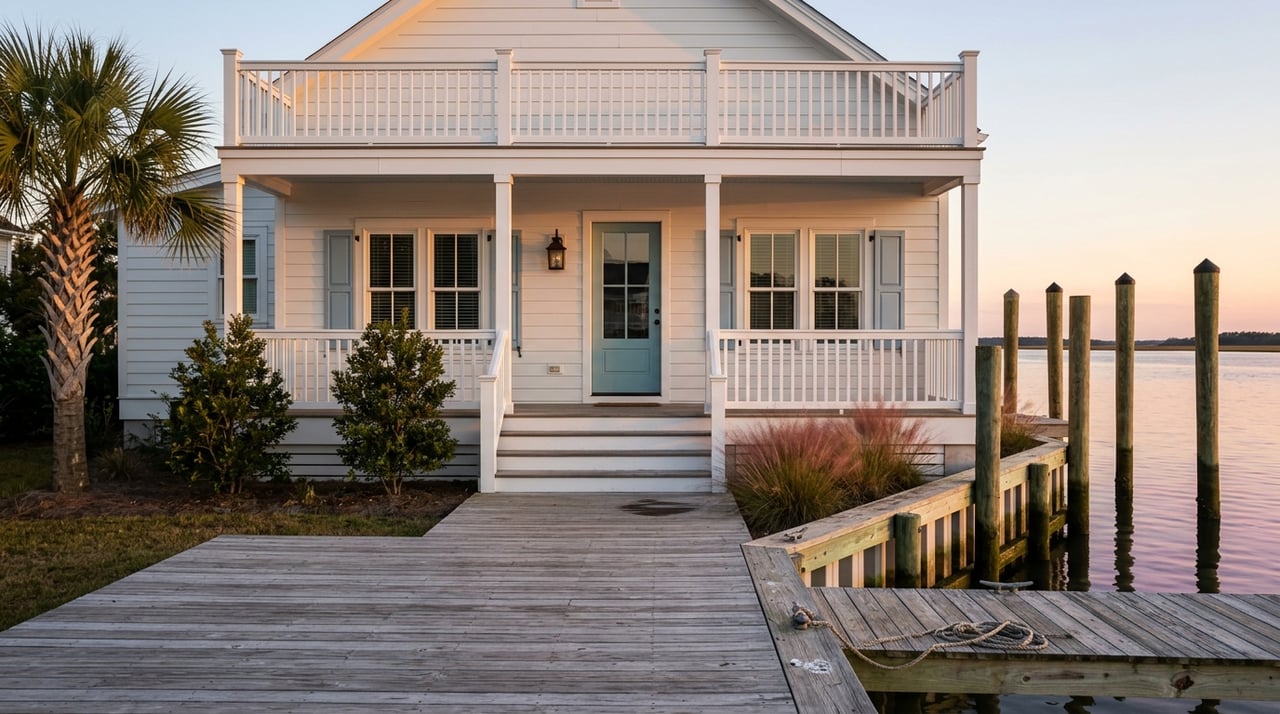
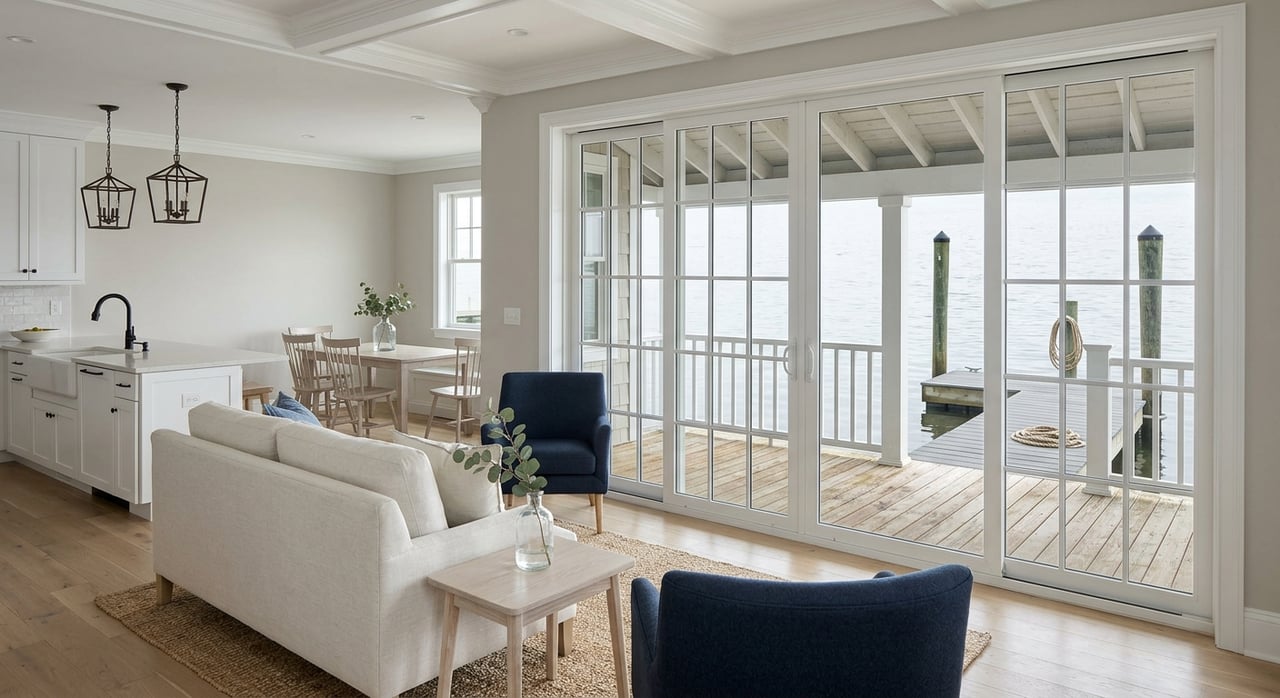
When you sell a waterfront home, the water should lead the story. Buyers often scroll through photos quickly, and your first images need to show why the setting is special. If the view, dock, or outdoor living space is a major selling point, it should be easy to see right away.
That usually means keeping water-facing rooms bright and simple, clearing visual clutter from decks and docks, and making outdoor spaces feel usable. Good staging helps buyers picture morning coffee on the porch, easy boat days, or quiet evenings by the water. In a coastal market, lifestyle and function often work together.
Waterfront staging priorities
- Make water-facing rooms the visual focus
- Keep the deck, dock, and shoreline neat and open
- Stage outdoor seating areas with a clear purpose
- Show the property when water views are strongest
- Include dock, lift, slip, or shoreline photos early in the listing
In Morehead City, it can also help to show the property when access is easiest and the water looks its best. Tide conditions matter locally, and buyers who care about boating will notice those details.
Market the function, not just the feeling
Lifestyle marketing matters, but waterfront buyers also want specifics. A beautiful sunset photo can draw them in, but details about water depth, slip access, lift capacity, or protected docking often help them take the next step. The strongest listings pair emotional appeal with practical information.
That is especially true in Morehead City, where boating access is central to how many buyers use a property. Can they launch quickly? Is the docking setup simple to use? Does the home offer easier access to the ICW, inlet, creek, or a more protected water setting? These are real decision points for coastal buyers.
A well-marketed listing should answer those questions clearly in the photos, description, and showing experience. When buyers understand both the beauty and the function of the property, they can value it more accurately.
Why coastal expertise helps
Waterfront sales come with details that generic home marketing often misses. Choosing the right comps, translating dock and slip features into buyer value, and organizing permit and flood information all take local knowledge. So does planning showings around the realities of tide, access, and the way waterfront buyers compare options.
That is where a boutique coastal team can make a real difference. You want guidance that feels personal, but also a marketing approach that is data-informed and built for today’s buyers. For a Morehead City waterfront seller, both matter.
If you are thinking about selling your waterfront home in Morehead City, the right plan can help you present the property clearly, answer buyer concerns early, and compete more effectively in a specialized market. To start that conversation, connect with the Low Tide Living NC Team.
FAQs
What makes selling a waterfront home in Morehead City different from selling an inland home?
- Waterfront buyers often focus on boating access, flood context, shoreline structures, and water depth, so pricing, prep, and marketing usually need a more specialized approach.
What documents should you gather before listing a Morehead City waterfront home?
- Try to have permits for docks or bulkheads, repair records, a survey or plat, flood-zone and elevation information, insurance details, and any HOA or marina documents tied to water access.
How should you price a waterfront home in Morehead City?
- Your home should be compared to similar waterfront properties with similar access, frontage, and boating features, rather than to inland homes with very different buyer appeal.
What waterfront features matter most to buyers in Morehead City?
- Buyers often pay close attention to dock or slip access, boat lift capacity, water depth, shoreline condition, protected water access, and the quality of the view and outdoor spaces.
How should you stage a waterfront home in Morehead City for photos and showings?
- Focus on the view first by keeping water-facing rooms bright, clearing decks and docks, and making outdoor spaces feel open, useful, and easy to imagine enjoying.
Why do flood details matter when selling a waterfront home in Morehead City?
- Buyers often want early clarity on flood zones, insurance, and elevation because flooding is a known part of the local coastal environment and standard homeowners insurance does not cover flooding.